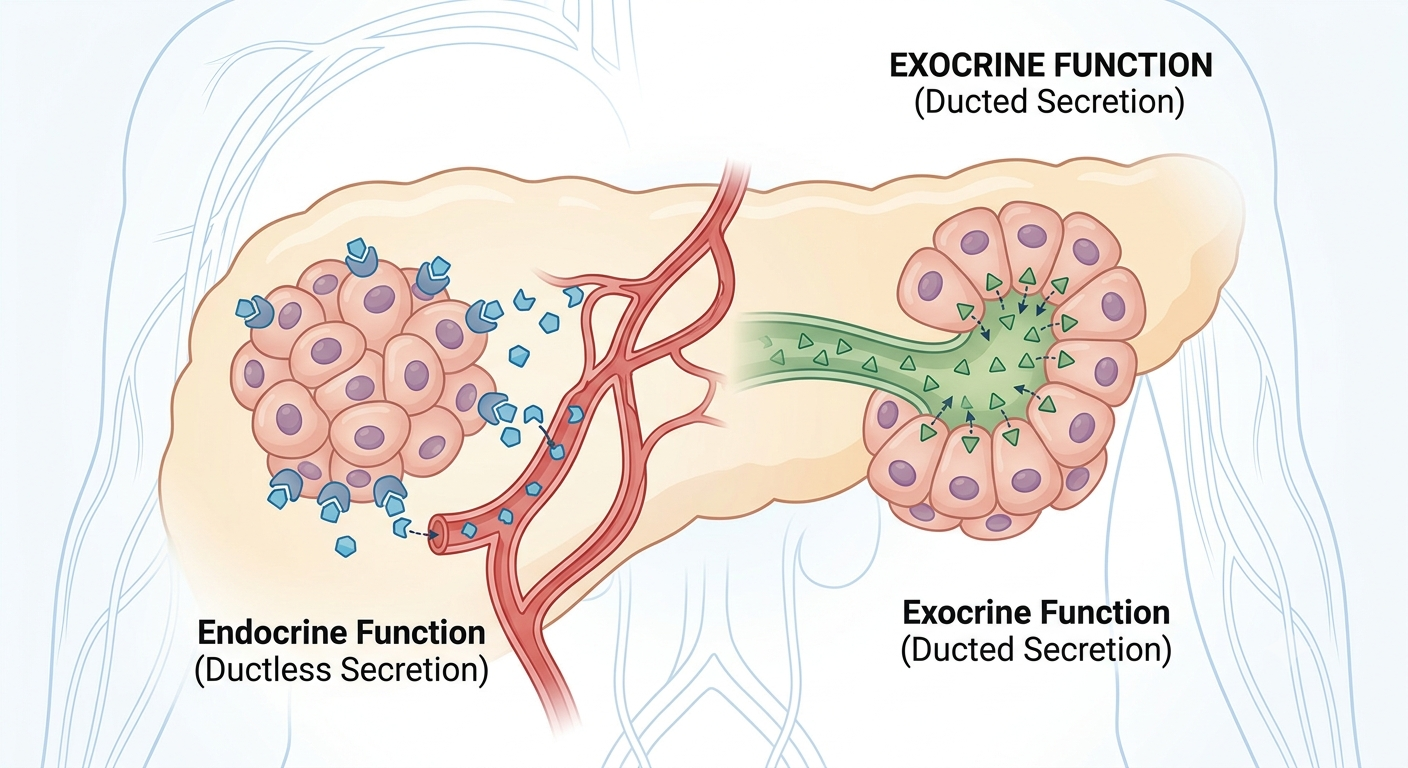
What is the endocrine system?
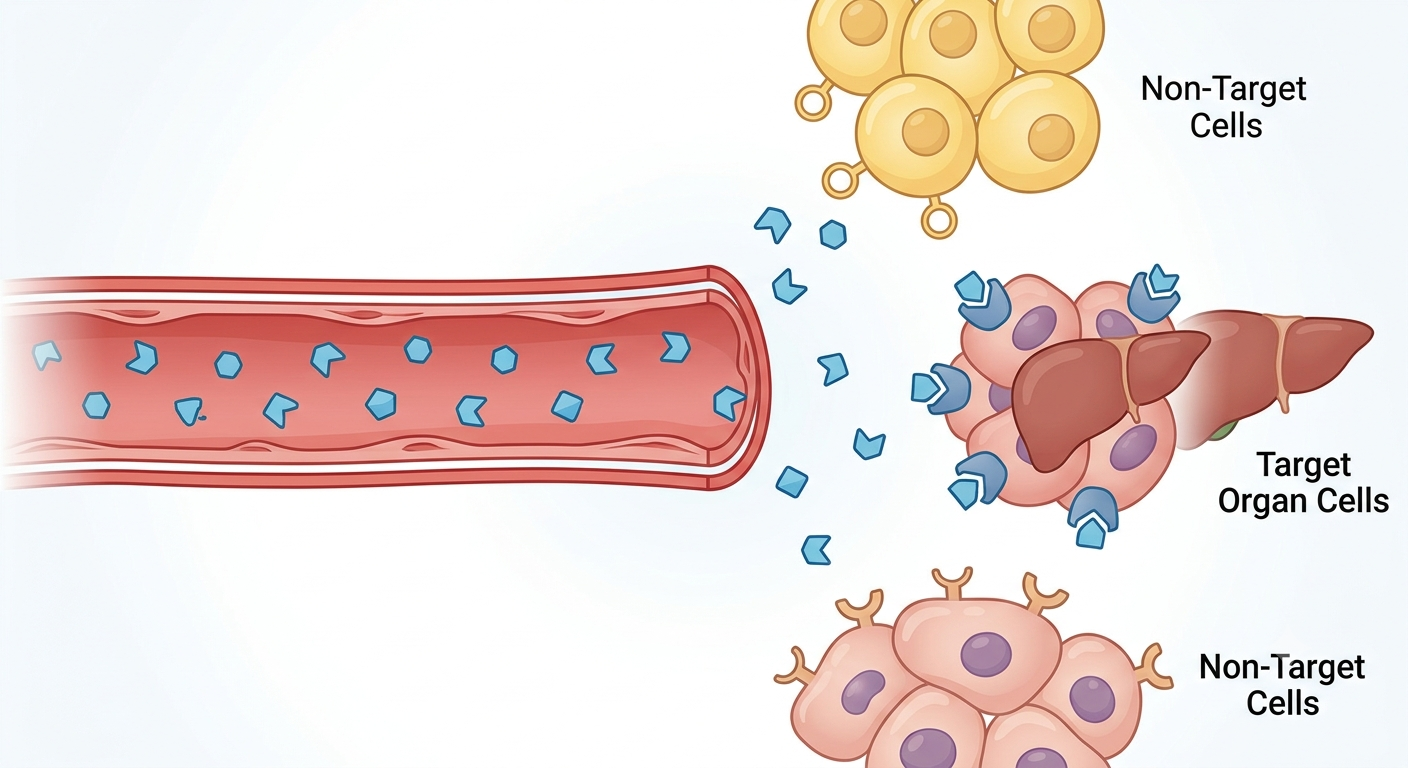
The endocrine system is a network of glands that produce and secrete hormones — chemical messengers released directly into the bloodstream. Hormones travel throughout the body but only affect specific target organs or tissues, which have receptors that recognise that particular hormone.
Nervous vs endocrine control
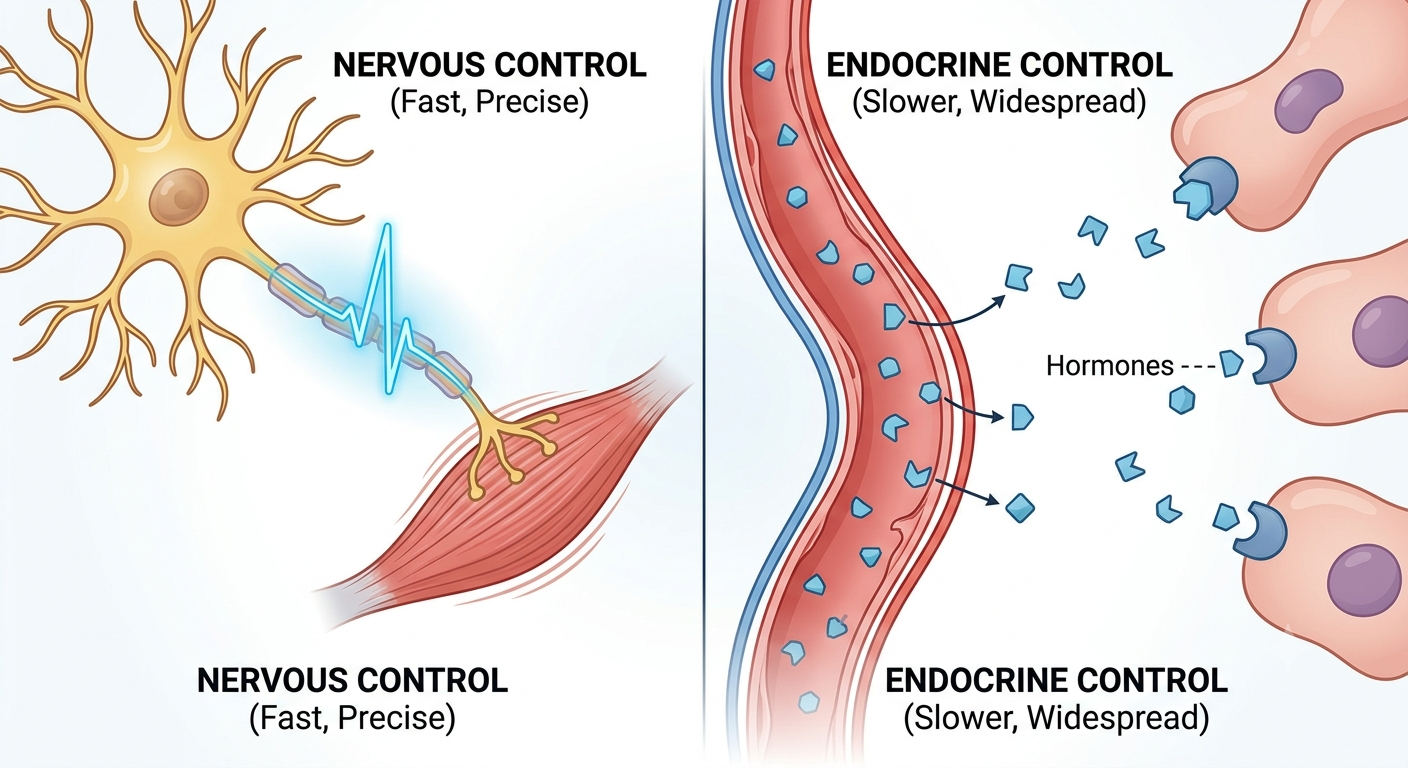
The body has two communication systems working together: the fast, electrical nervous system, and the slower, chemical endocrine system. Each is suited to different jobs — nerves for split-second reactions, hormones for sustained, body-wide changes.
| Nervous system | Endocrine system | |
|---|---|---|
| Signal type | Electrical impulse | Chemical (hormone) |
| Transmitted via | Neurons (nerve cells) | Bloodstream |
| Speed of response | Very fast (milliseconds) | Slower (seconds to days) |
| Duration of effect | Short-lived | Long-lasting |
| Area affected | Precise, localised | Can be widespread |
Major endocrine glands and their hormones
Several glands throughout the body secrete hormones with specific roles:
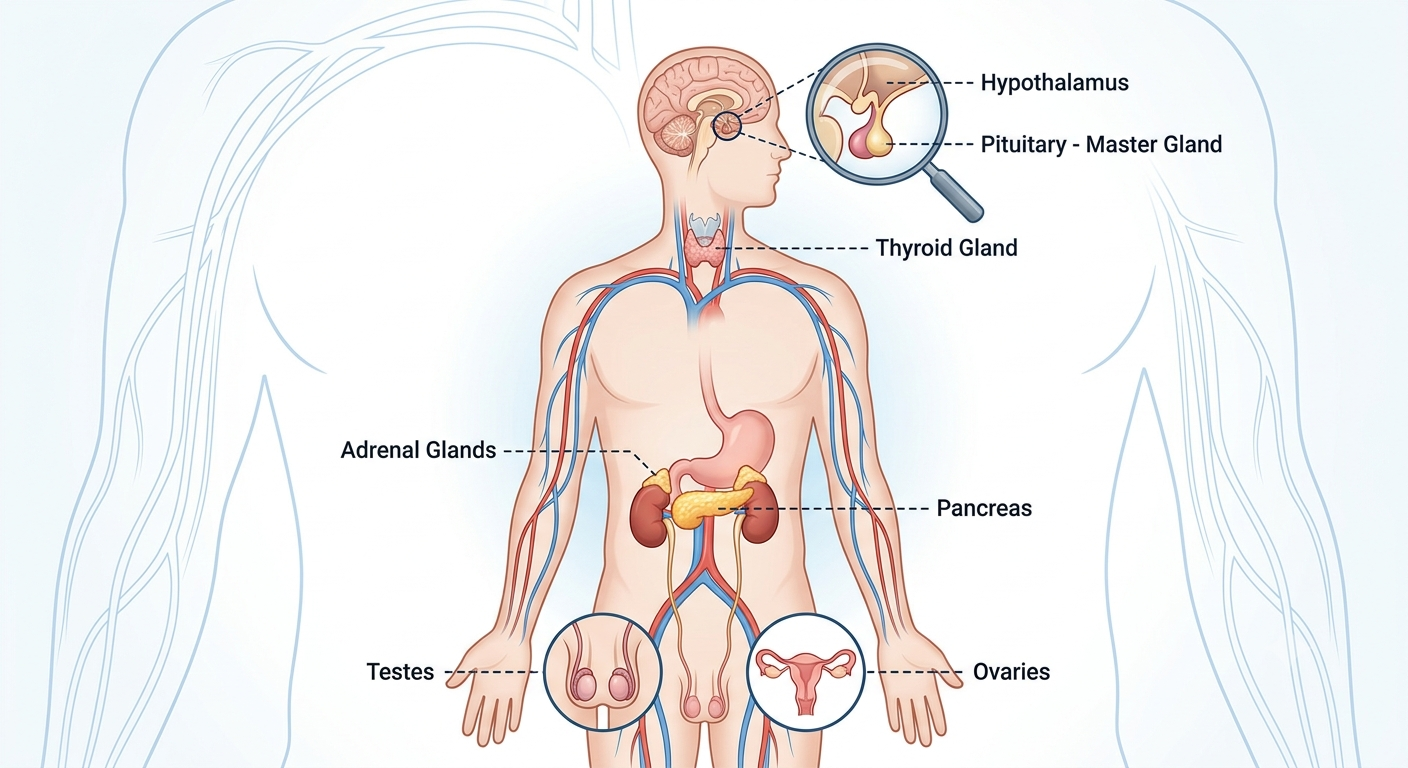
- Pituitary gland — located at the base of the brain; called the "master gland" because it releases hormones that control the activity of most other endocrine glands (e.g. growth hormone, and hormones that trigger the thyroid and gonads).
- Thyroid gland — in the neck; secretes thyroxine, which regulates the body's metabolic rate (how quickly cells use energy).
- Adrenal glands — on top of each kidney; secrete adrenaline during stress or danger, triggering the "fight-or-flight" response (increased heart rate, blood glucose release, and blood flow to muscles).
- Pancreas — secretes insulin and glucagon, which regulate blood glucose concentration.
- Gonads (testes in males, ovaries in females) — secrete sex hormones (testosterone; oestrogen and progesterone) that control the development of secondary sexual characteristics and reproductive cycles.
How hormones reach their target
Once secreted, a hormone diffuses into nearby capillaries and is carried around the body dissolved in the blood plasma. It only produces an effect in cells with the correct receptor for that hormone — the target cells. This is why a single hormone circulating everywhere in the blood can still have a very specific effect.
Endocrine vs exocrine glands
Not all glands work the way endocrine glands do. It's important to distinguish the two types:
| Endocrine glands | Exocrine glands | |
|---|---|---|
| Ducts | Ductless | Have ducts |
| How secretions travel | Hormones released directly into the bloodstream | Secretions released directly into a cavity, onto a surface, or to a specific target organ (not into the blood) |
| Examples | Thyroid, pituitary, adrenal glands, pancreas (hormone-producing part) | Sweat glands, salivary glands, pancreas (enzyme-producing part) |