Humans reproduce sexually: a sperm cell (the male gamete) fuses with an egg cell, or ovum (the female gamete), to form a new individual. Each gamete is haploid, carrying only half the usual number of chromosomes, so the fertilised cell they form together has the full diploid set needed for normal human development.
Producing these gametes, bringing them together, and supporting a developing pregnancy are the jobs of two distinct sets of organs. This lesson works through both the male and female reproductive systems, the hormones that drive the menstrual cycle, and what happens from fertilisation through to implantation in the uterus.
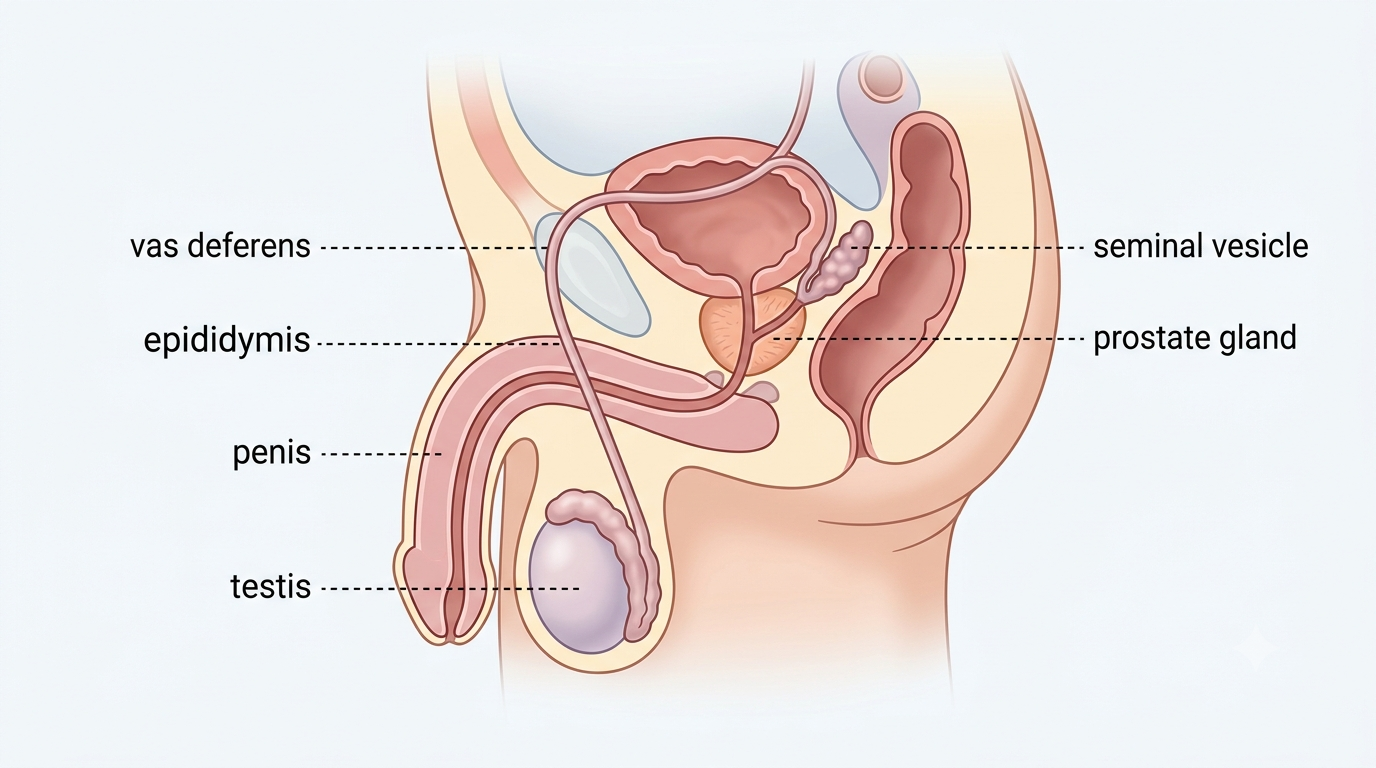
The male reproductive system
The testes (singular: testis) are the primary male reproductive organs — they produce sperm cells (male gametes) and the hormone testosterone. Sperm mature and are stored in the epididymis before passing through the vas deferens during ejaculation.
- Seminal vesicles and the prostate gland add fluids that nourish and help transport sperm, together forming semen.
- The penis is the organ through which semen is deposited into the female's vagina during sexual intercourse (internal fertilisation).
The female reproductive system
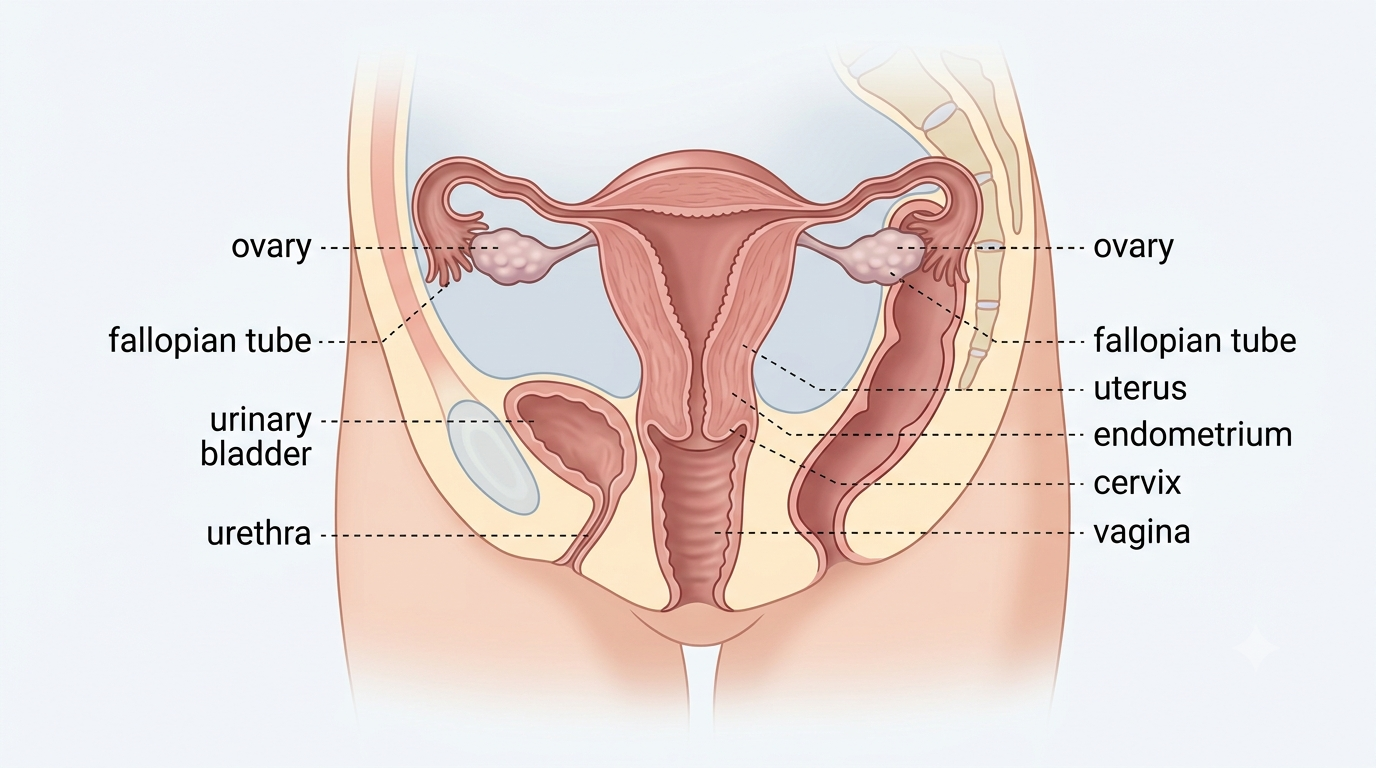
The ovaries are the primary female reproductive organs — they produce egg cells (ova) and the hormones oestrogen and progesterone.
- The oviducts (Fallopian tubes) carry a released egg from the ovary toward the uterus — fertilisation normally occurs here.
- The uterus (womb) is where a fertilised egg implants and develops during pregnancy; its inner lining (endometrium) thickens each month to prepare for a possible pregnancy.
- The cervix is the narrow lower entrance to the uterus, and the vagina is the muscular canal connecting the cervix to the outside of the body — it receives the penis during intercourse and is the birth canal during childbirth.
The menstrual cycle
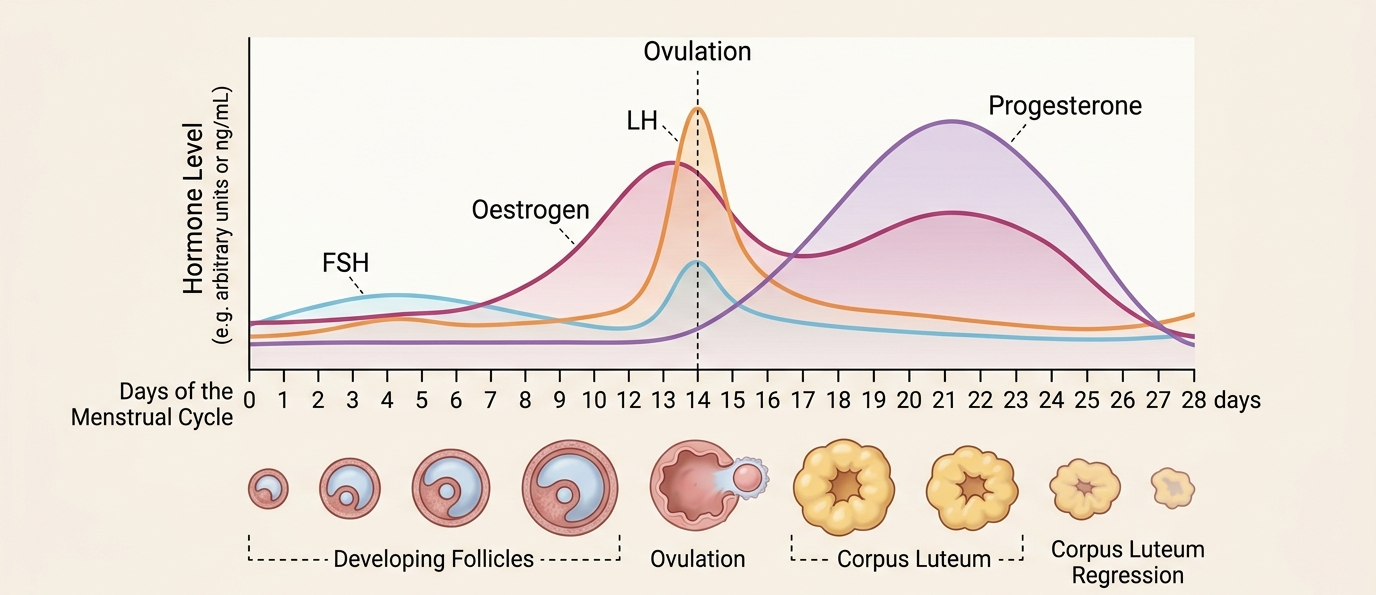
The menstrual cycle is a roughly monthly cycle controlled by hormones, preparing the body for a possible pregnancy:
- FSH (follicle-stimulating hormone), from the pituitary gland, stimulates a follicle in the ovary to mature, which produces oestrogen.
- Rising oestrogen thickens the uterine lining and triggers a surge of LH (luteinising hormone), which causes ovulation — the release of a mature egg from the ovary.
- The ruptured follicle becomes the corpus luteum, which secretes progesterone, maintaining the thickened uterine lining in case of pregnancy.
- If the egg is not fertilised, progesterone levels fall, the lining breaks down and is shed — menstruation — and the cycle begins again.
Fertilisation, implantation, and the placenta
Fertilisation — the fusion of a sperm cell and an egg cell — normally takes place in the oviduct (fallopian tube), forming a diploid zygote. As the zygote travels down the oviduct toward the uterus, it develops through a defined sequence of stages:
The morula is a solid ball of cells produced by repeated mitotic division of the zygote, with no increase in overall size. It continues dividing to form the blastocyst (also called a blastula) — now a hollow ball of cells with a fluid-filled cavity. The blastocyst is the stage that embeds itself into the thickened uterine lining, a process called implantation.
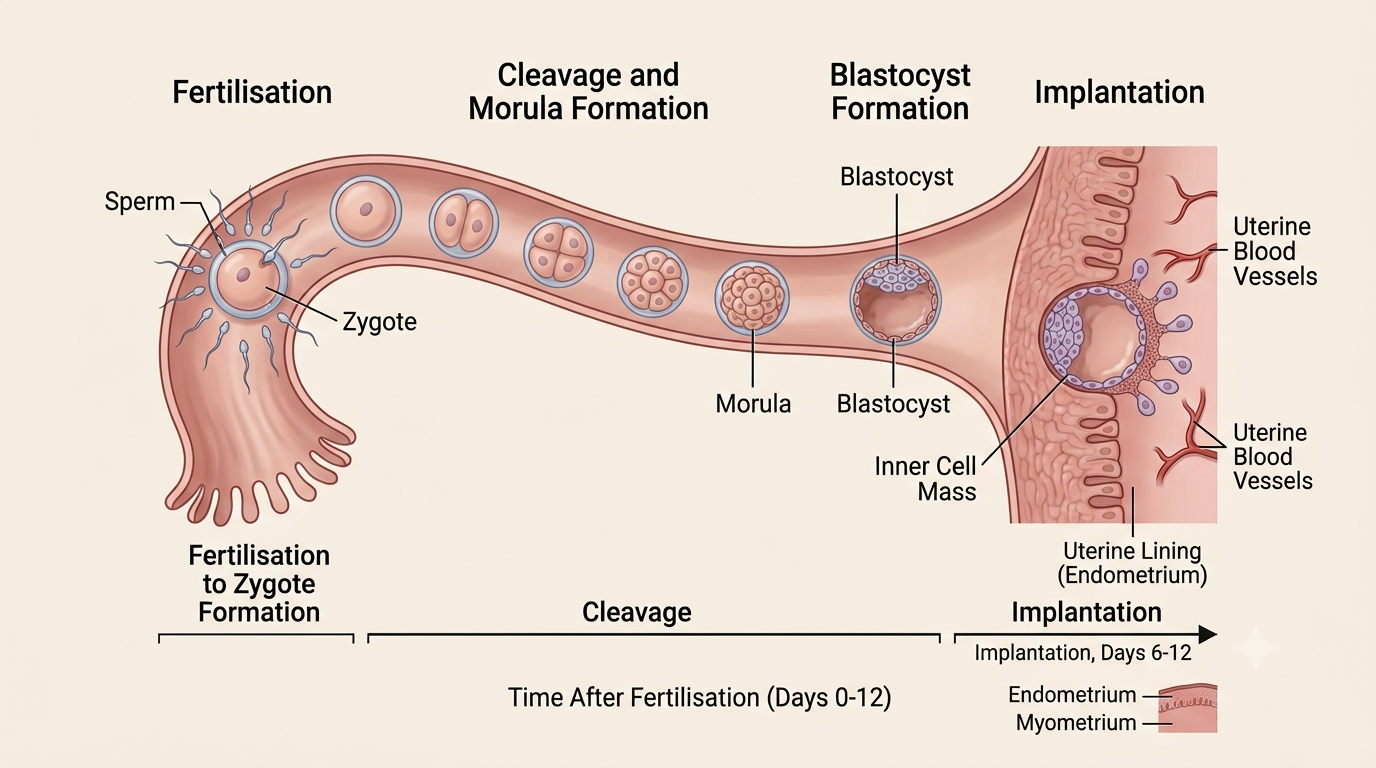
The placenta then develops, forming the vital link between mother and developing fetus throughout gestation. It allows the exchange of oxygen, nutrients, and waste products between the mother's blood and the fetus's blood (without the two directly mixing), and also produces hormones that maintain the pregnancy.